1872 Clipper Tea is one of Singapore’s oldest tea brands, known for its heritage blends and flagship store in ION Orchard. Yet its heritage positioning also posed a challenge: how could the brand appeal to younger audiences accustomed to specialty coffee and bubble teas in an age of online discovery?
To support this shift, we scoped a two-phase engagement:
Service Design: Understand customer behaviors and reimagine the in-store tea bar experience
Web Design: Translate those insights into a cohesive, brand-aligned e-commerce website experience
reimagine the tea bar experience to express 1872 Clipper Tea Co.’s heritage and quality as a modern lifestyle brand that resonates with younger customers?
translate the brand’s in-store experience into a modern e-commerce website for tea discovery and appreciation?
/tl;dr
/retail service design process (phase 1)
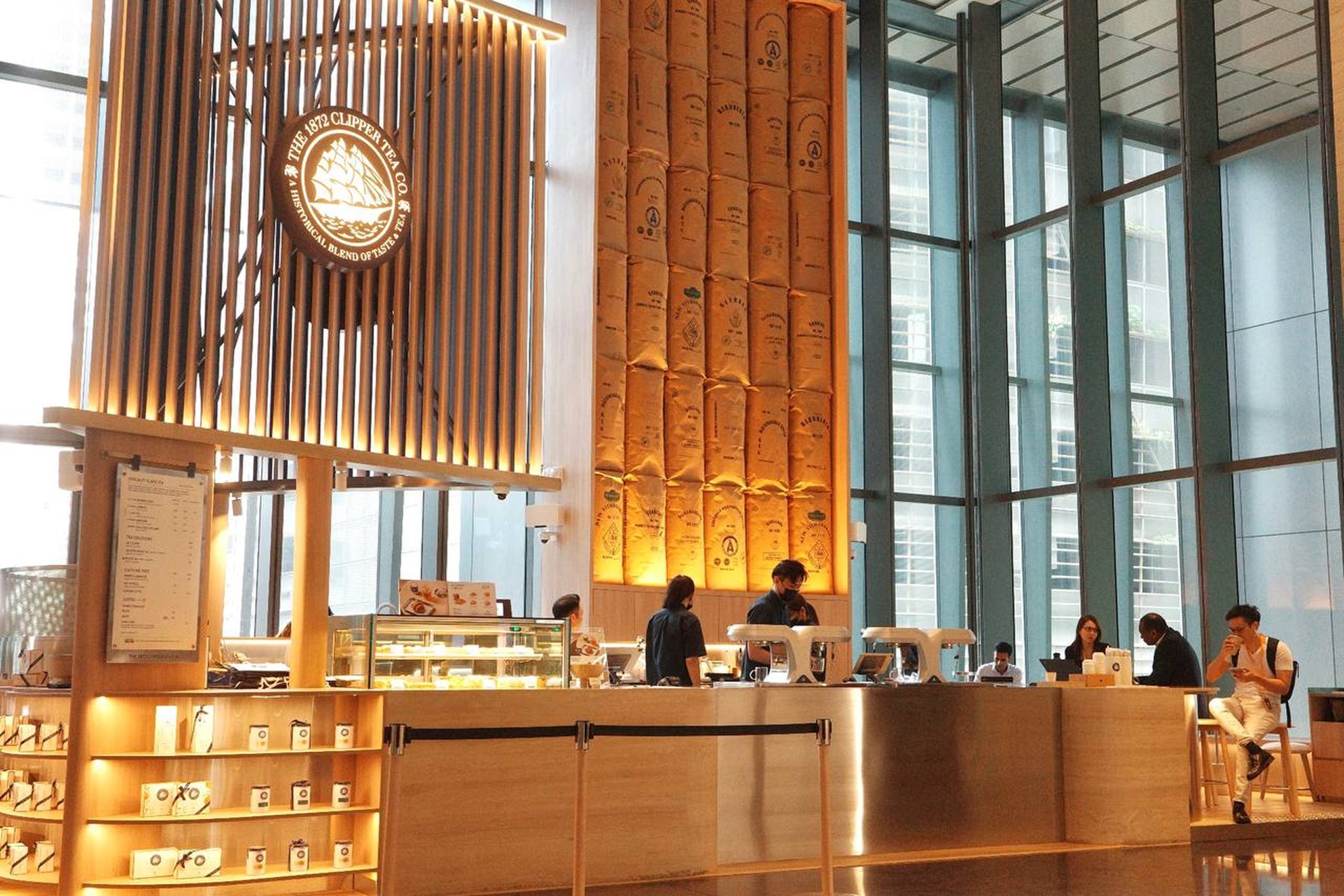
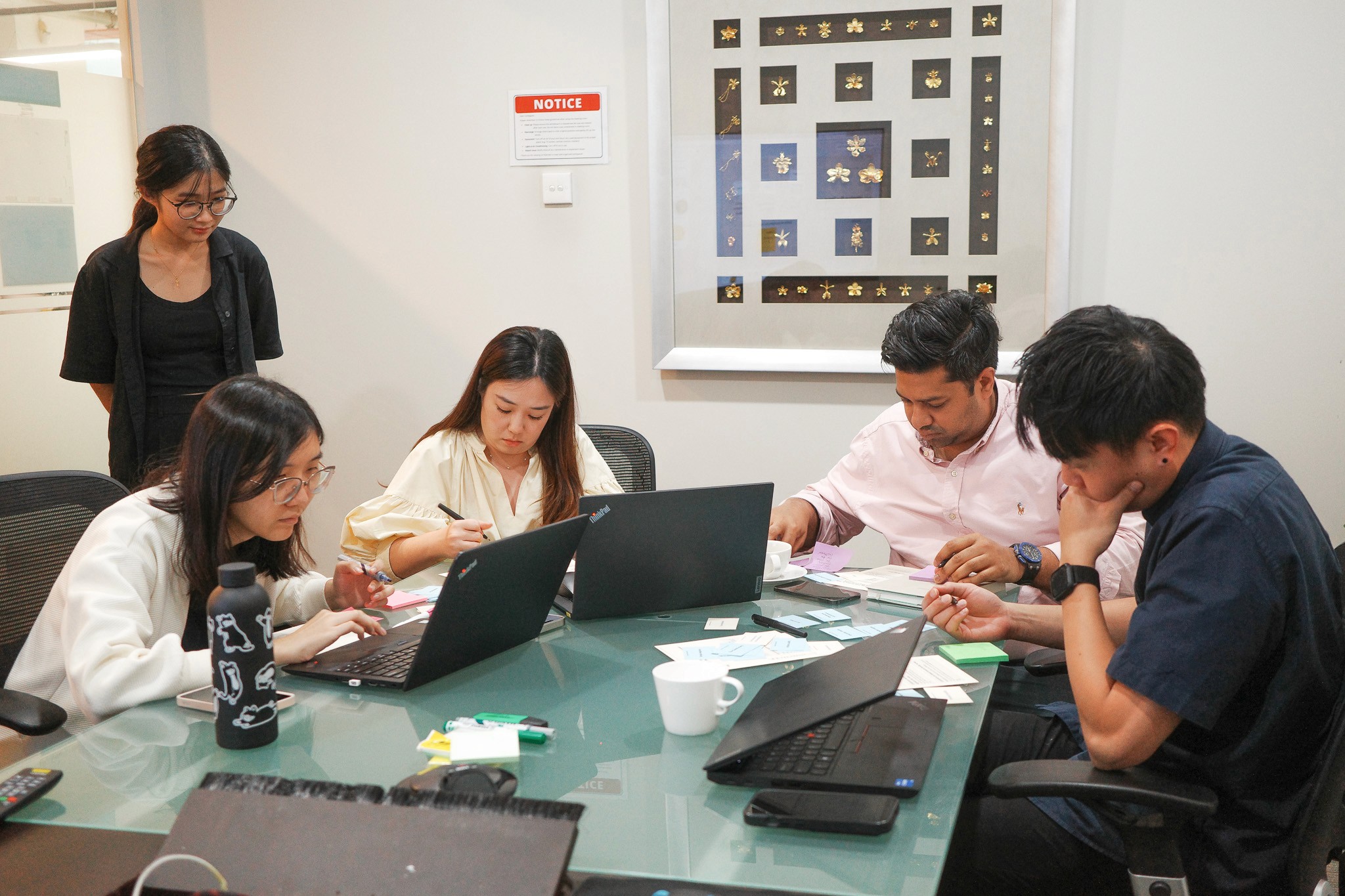
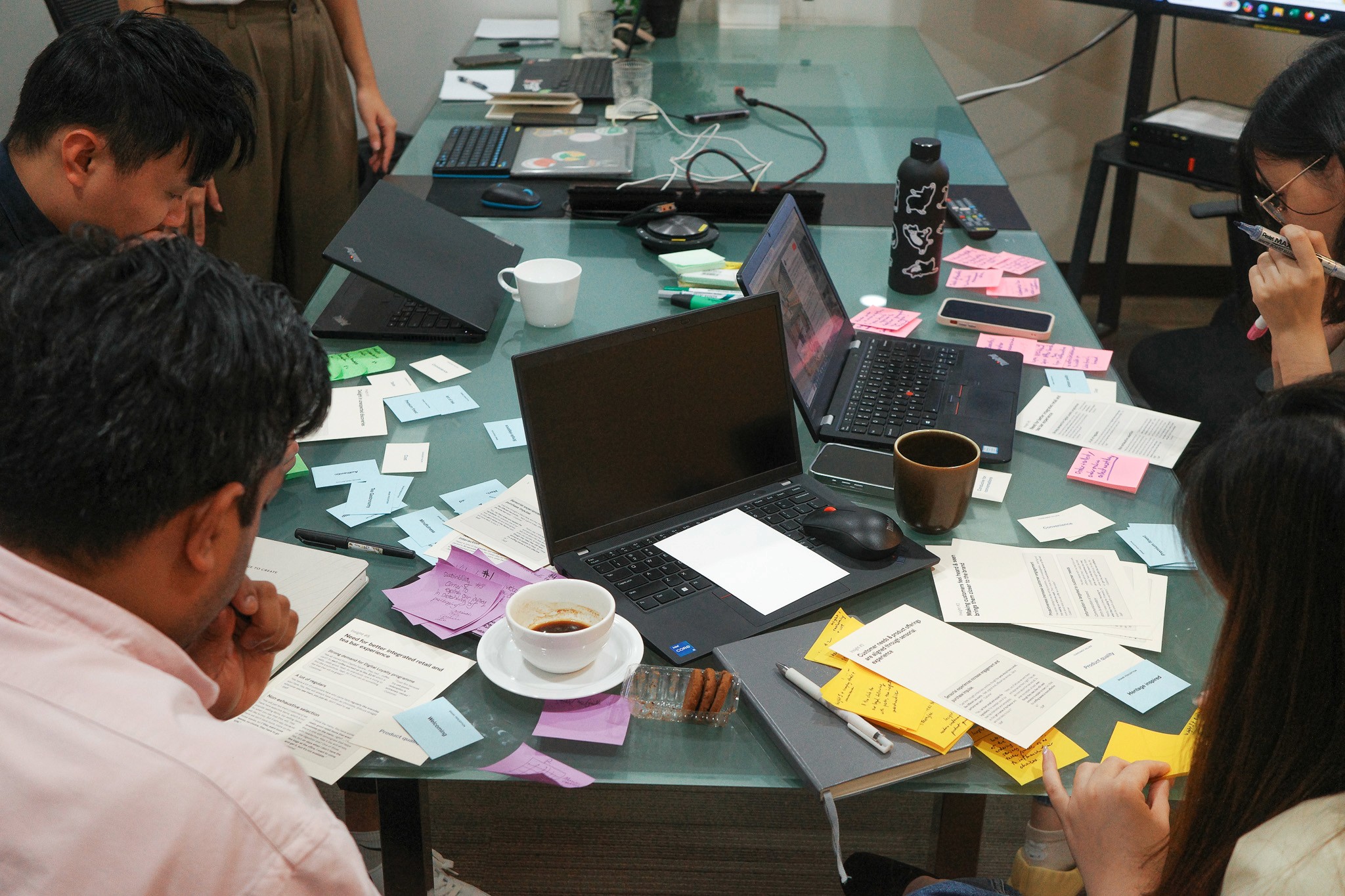
For Phase 1, we sought to understand the in-store experience from both customer and staff perspectives. We conducted interviews with 9 customers and all 4 staff members at the newly-opened IOI Central Boulevard Towers outlet. These were complemented by fly-on-the-wall observations during both peak and off-peak hours to capture natural behaviors and service dynamics. Insights gathered were synthesised through collaborative workshops with internal stakeholders, where we co-created key opportunity areas for design intervention.
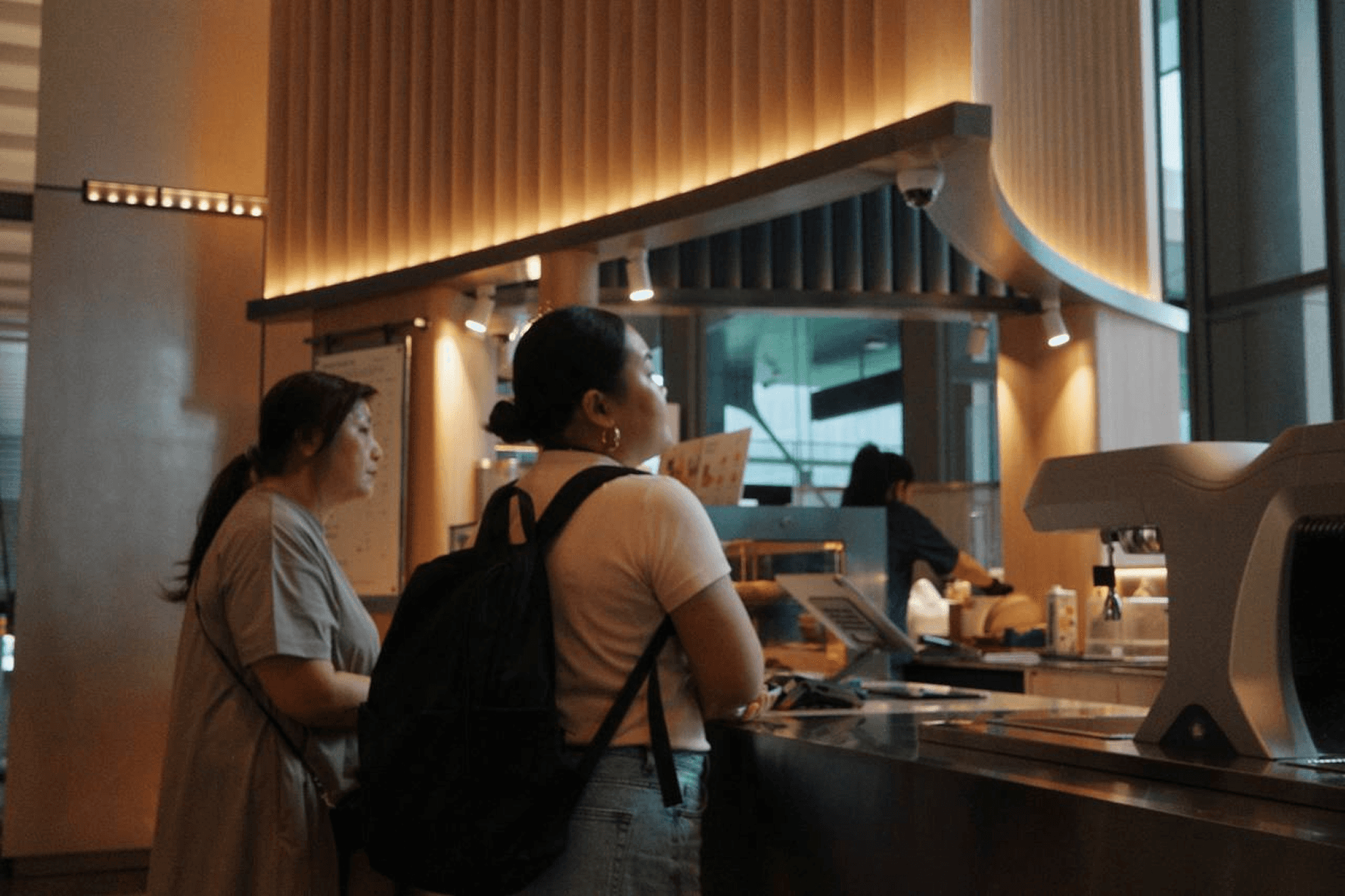
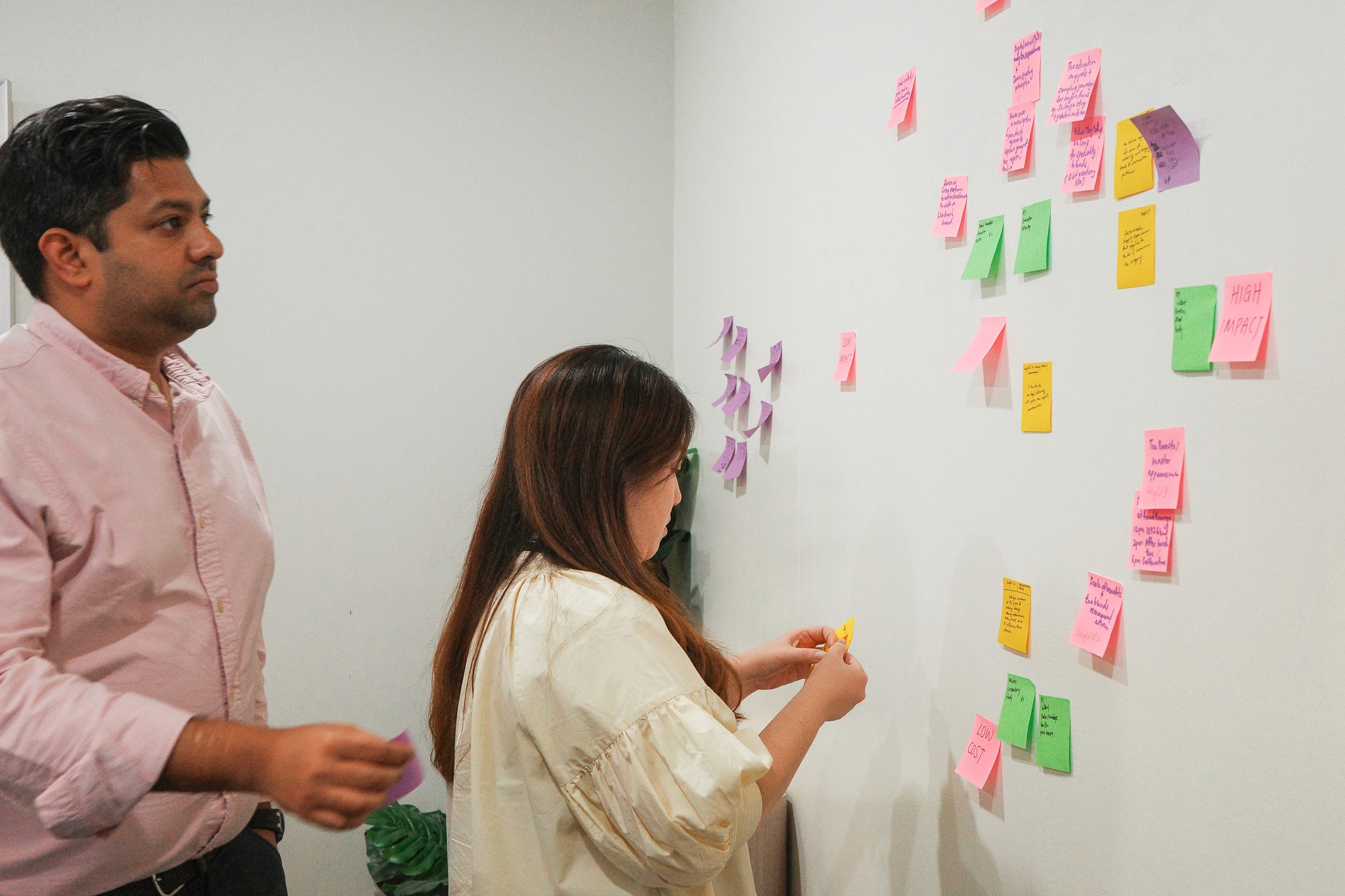
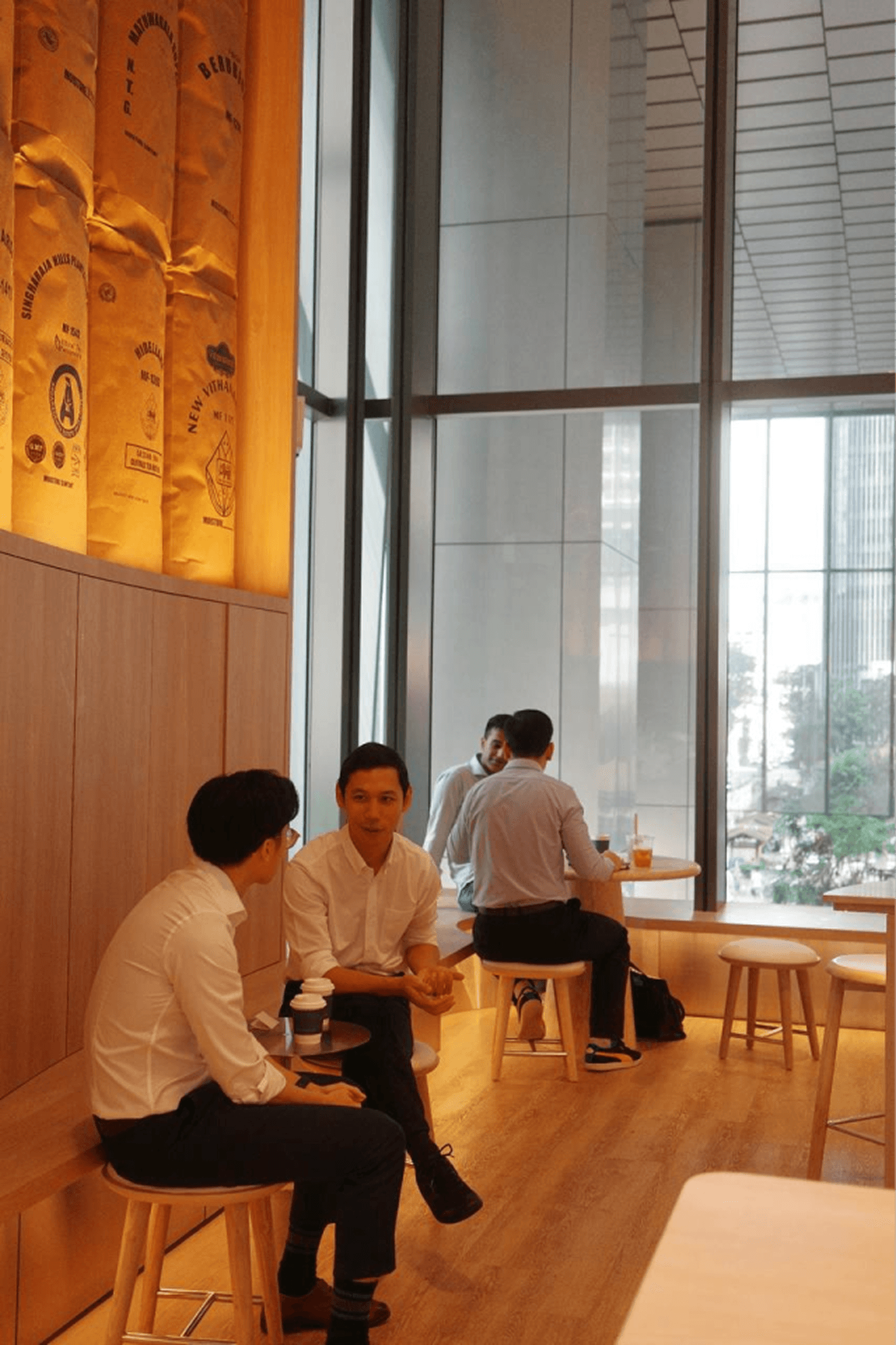 Customers at the IOI outlet, observed in the morning before the post-lunch crowd. | 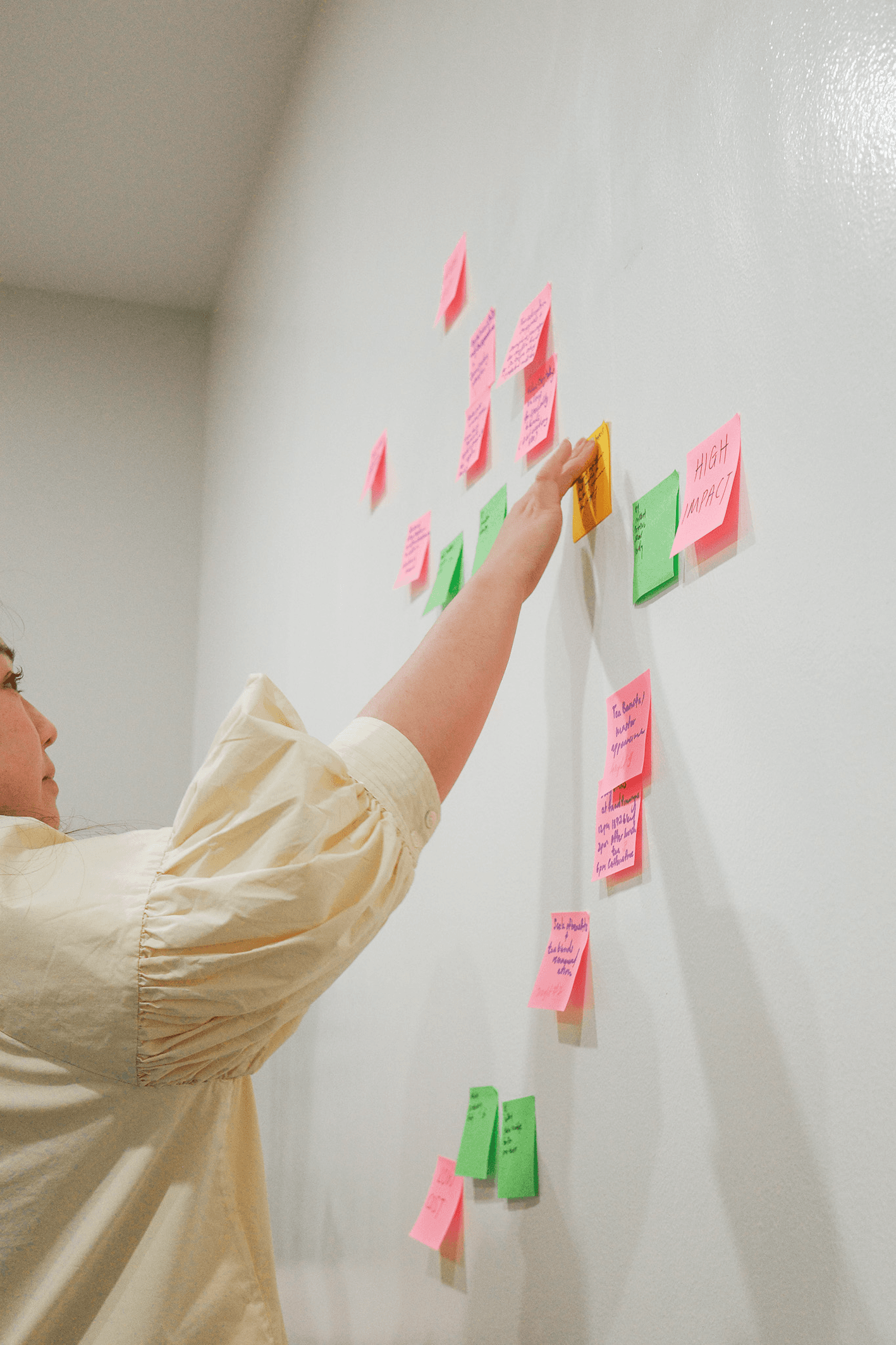 Marketing team lead pasting post-its on a wall during the co-creation workship. |
/research methods
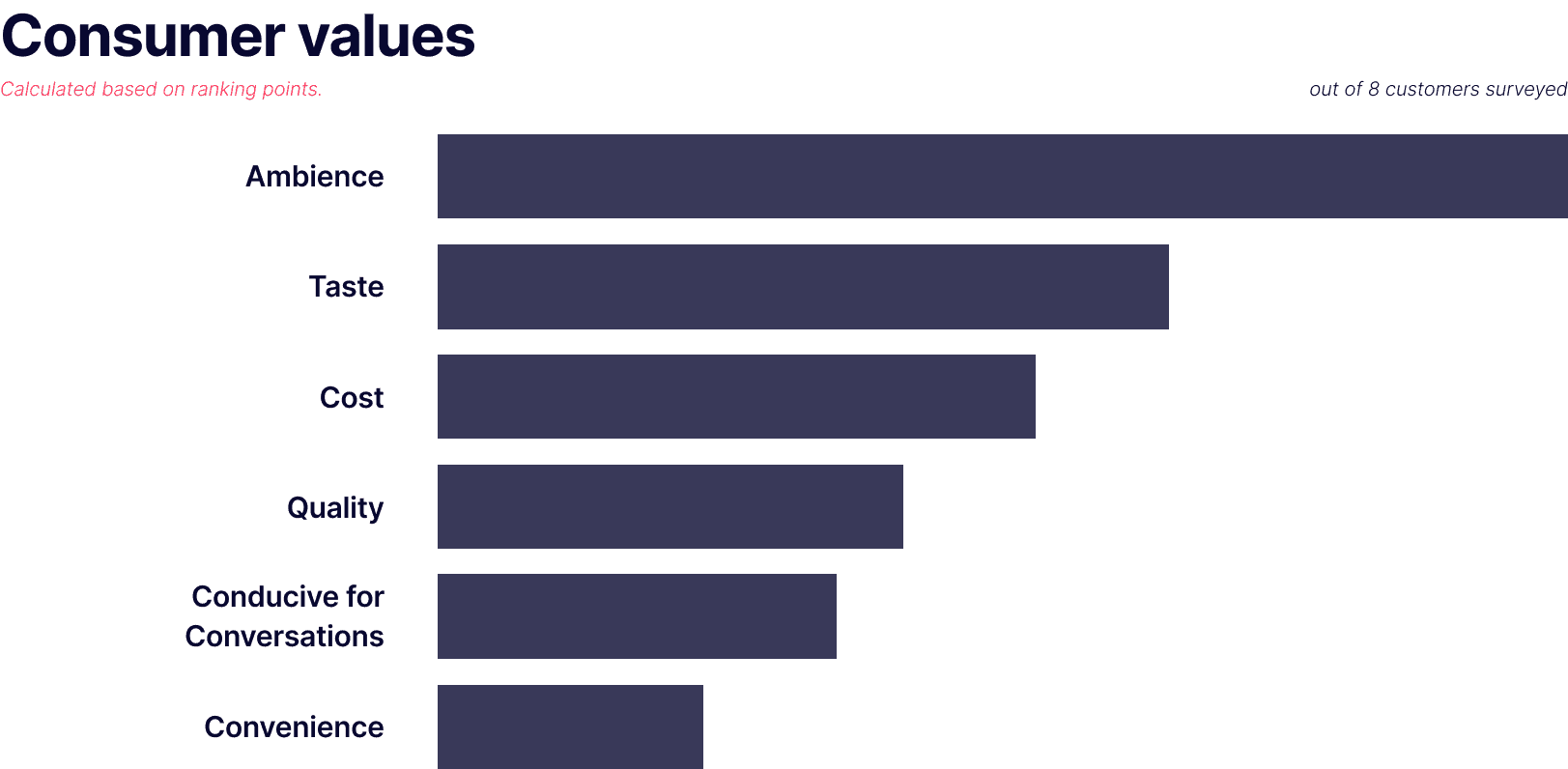
Because the company was undergoing rebranding efforts to appeal to a new, younger target demographic, it was important to understand this group better, to compare it with the existing target demographic, which consisted primarily of middle-aged women.
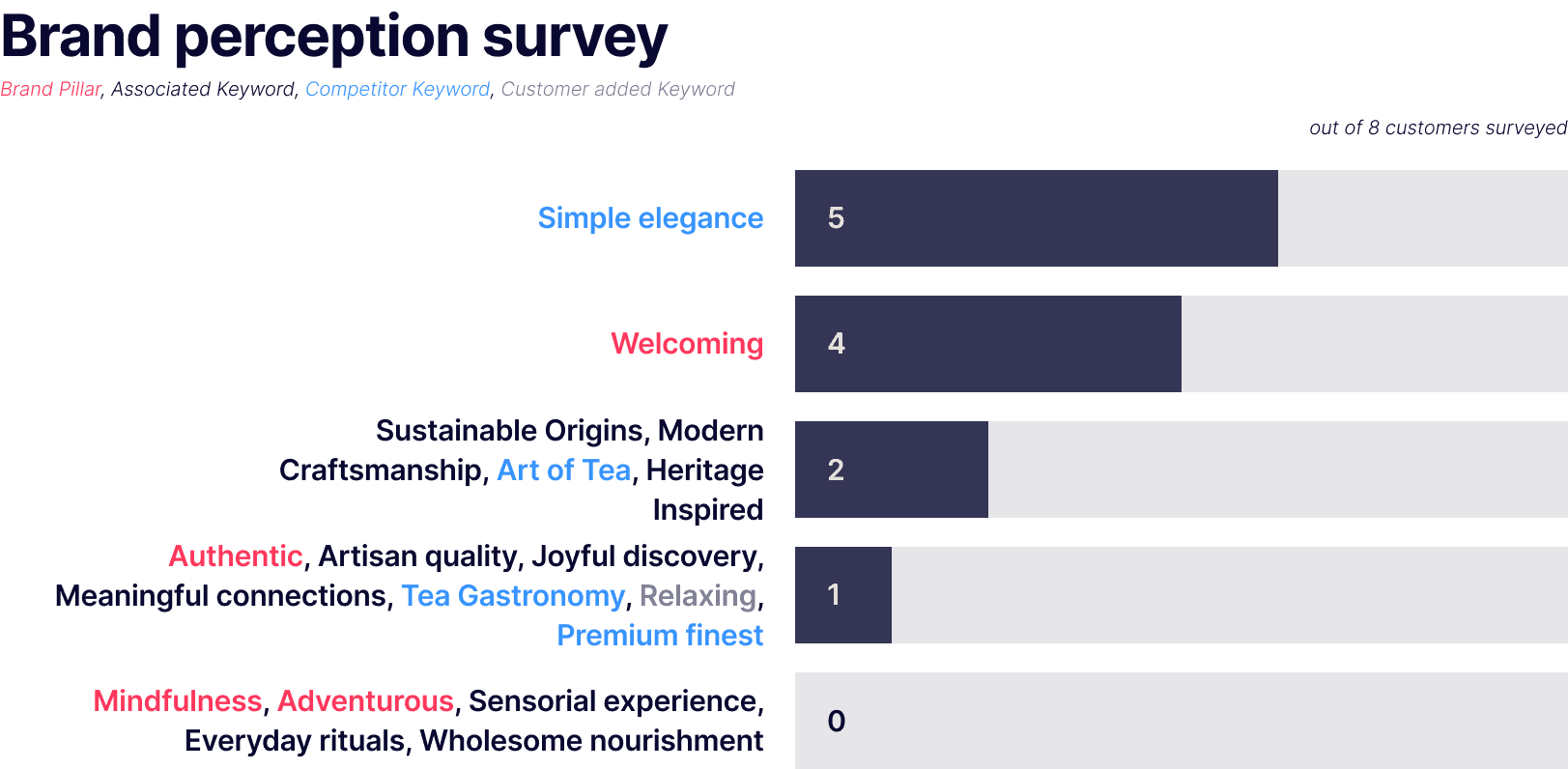
We conducted a customer survey at the store with 2 open card sorts, seeking to understand the most relevant consumer values, as well as what they perceive of the brand. The participants ranked their top three values for each question, and the results were tabulated.
/insights
#1 Delight in unexpected discoveries
Customers are unaware of the origins of tea
“Cos I am assuming it [matcha] is from Kyoto, right?“ - Customer
Customers misunderstand the concept & origins of signature tea menu
“Actually they will ask for a recommendation...if we name the tea like like Shibuya, Kowloon, do they really know what is the tea? ... They think like, oh actually the tea is from Japan like Shibuya, Kowloon like Hong Kong.“ - Staff
Customers are biased towards familiar names
Bestsellers are Chelsea’s Earl Grey and Shibuya
"But if you think from another way like, eh Shibuya, the name actually sounds nice. That's why I go order the drinks. But when they have it here, actually it's good also.” - Staff
#2 Making customers feel heard & seen brings them closer to the brand
Proactiveness increase customer engagement
“He started talking to me like asking questions... he's knowledgeable... sharing and then asking you what you want. Then I think that incentivized a person to find out more about what you can offer as a tea seller.” - Customer
Information is targeted to customer needs
“He also shared with me that it is a non caffeine and all that. I really like that concept. Yeah, sometimes you may drink over, drink too much. So I think when he brought that up, I'm like, ok, so I got the one with the non caffeine.” - Customer
Communication of brand story is secondary
“Mostly, I keep it direct, focusing on what they’re looking for. If needed, I’ll share the brand’s quality and history.” - Staff
#3 Customer needs & product offerings are aligned through sensorial experience
Sensorial experiences increase engagement and purchase impulse.
“Last time I brought a friend here, and they thought the cards should have a smell, like different tea scents.... Yeah, a good smell, different tea aromas... Like a perfume test card.” - Customer
#4 In-person ordering interaction is rich & personalised but time-consuming
Most customers preferred in-person ordering for interaction
“It's just more interaction that I can ask questions you can on the spot... I think online is easy and convenient but it lacks a certain...” - Customer
In-person ordering can better explain & recommend
“A person explaining and digital is totally different. Because some of them, they don't really go and read all those details. They will still have a question mark... So when in person, you can explain more about the tea to the customer. So there will be more information that you can deliver to the customer.” - Staff
Too much content to cover during short interaction
“Need to kind of like shorten our conversation between customer during peak period in 30 seconds. So within this 30 seconds, right, we need to let customers know what they want, what they like la so I can straight away decide for them.” - Staff
#5 Need for better integrated retail and tea bar experience
A lot of regulars
“We have a lot of customers here who came here regularly like everyday basis also have. Yes, they will always have a pain au chocolate, Shibuya straight. ... So whenever you see them, you just do, don’t need to ask.” - Staff
Strong demand for Digital Loyalty programme
“We all moved from Capitol Square, they had a coffee card? So each coffee worked up to like, $3.50 which is really, really good. Yeah. So everybody now is trying to find like a substitute.” - Customer
Non-exhaustive selection
“I think the menu. You have some really good retail items that aren’t available on the menu, right? ... I think there’s one with lemongrass that helps with headaches. Was it the anti-stress, or the digestion one? One of those. ... Yes, but on days when I don’t have the tea bags at the office, I want to come and get it, but it’s not available.” - Customer
/co-creation workshop
/design intervention
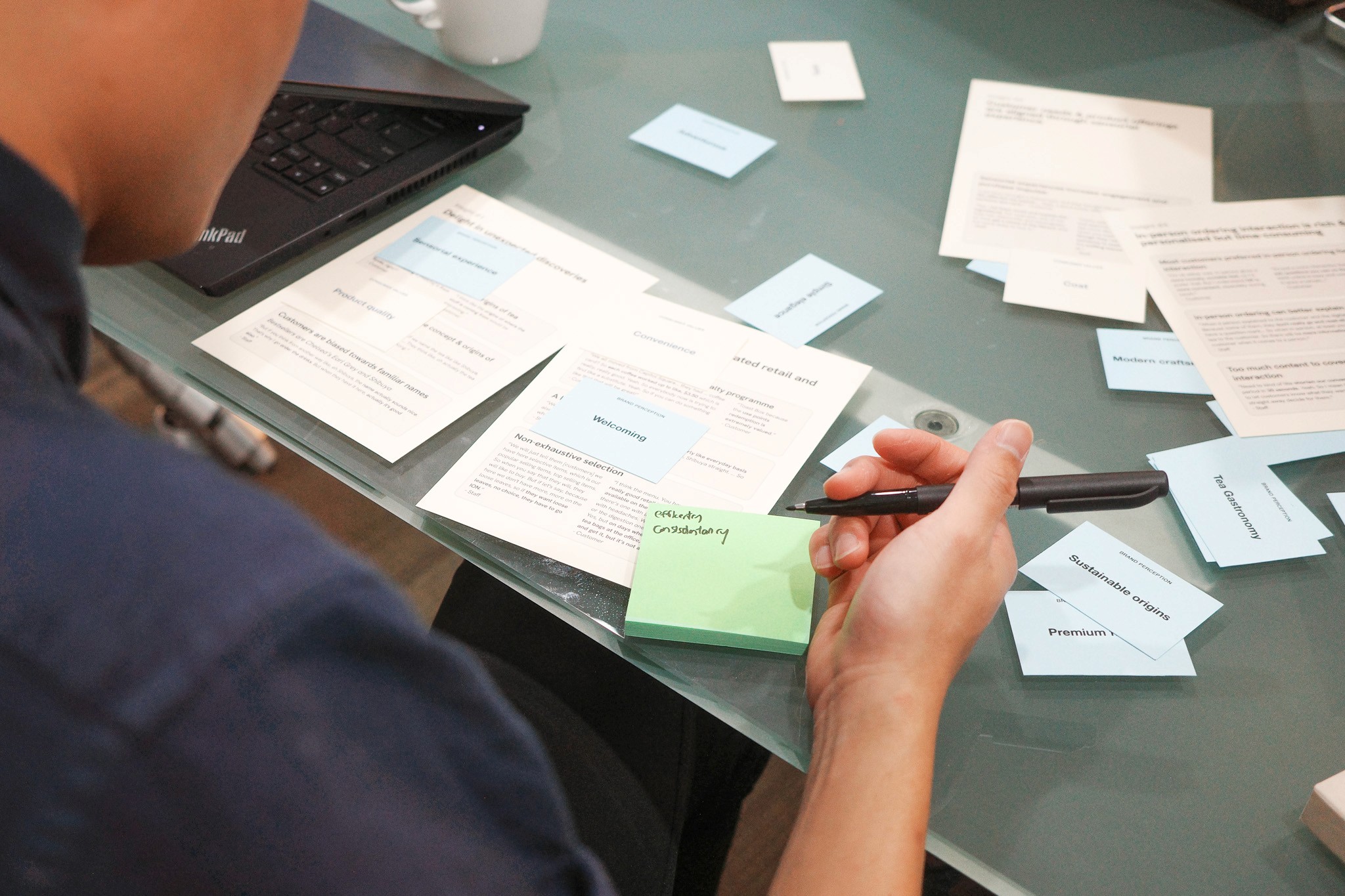
To move from insights to actionable interventions, we facilitated a Co-Creation Workshop with key client stakeholders (CEO, marketing team, and store manager) to collaboratively align on priorities and ideate around new directions for the tea bar experience.
Each of the five insights was paired with a brand value and consumer value as a prompt for ideation. Participants were invited to generate ideas based on these pairings, which we then mapped together using a cost–impact matrix to identify feasible, high-impact opportunities.
The workshop not only surfaced practical, grounded ideas but also helped build internal buy-in by directly involving decision-makers early in the design process.
Following the session, we synthesised the ideas into five concept directions, ranging from low-effort enhancements to more strategic, long-term initiatives. Each concept directly responds to one or more user insights uncovered in our research.

#1 Educational video – Tea origins and "traveling through taste"
For customers waiting in line to watch without much effort and convey brand message through visuals
Use powerful visuals that capture attention at a glance, each frame should be representative of the brand

#2 Scent as sense – through tea perfume, diffuser, or incense
Draw customers in with tea-based scent marketing to create a memorable sensory experience
Situated in customer’s journey: Welcome customers in the queue, enhance product discovery at retail area, and leave a lingering impression at tea bar seating
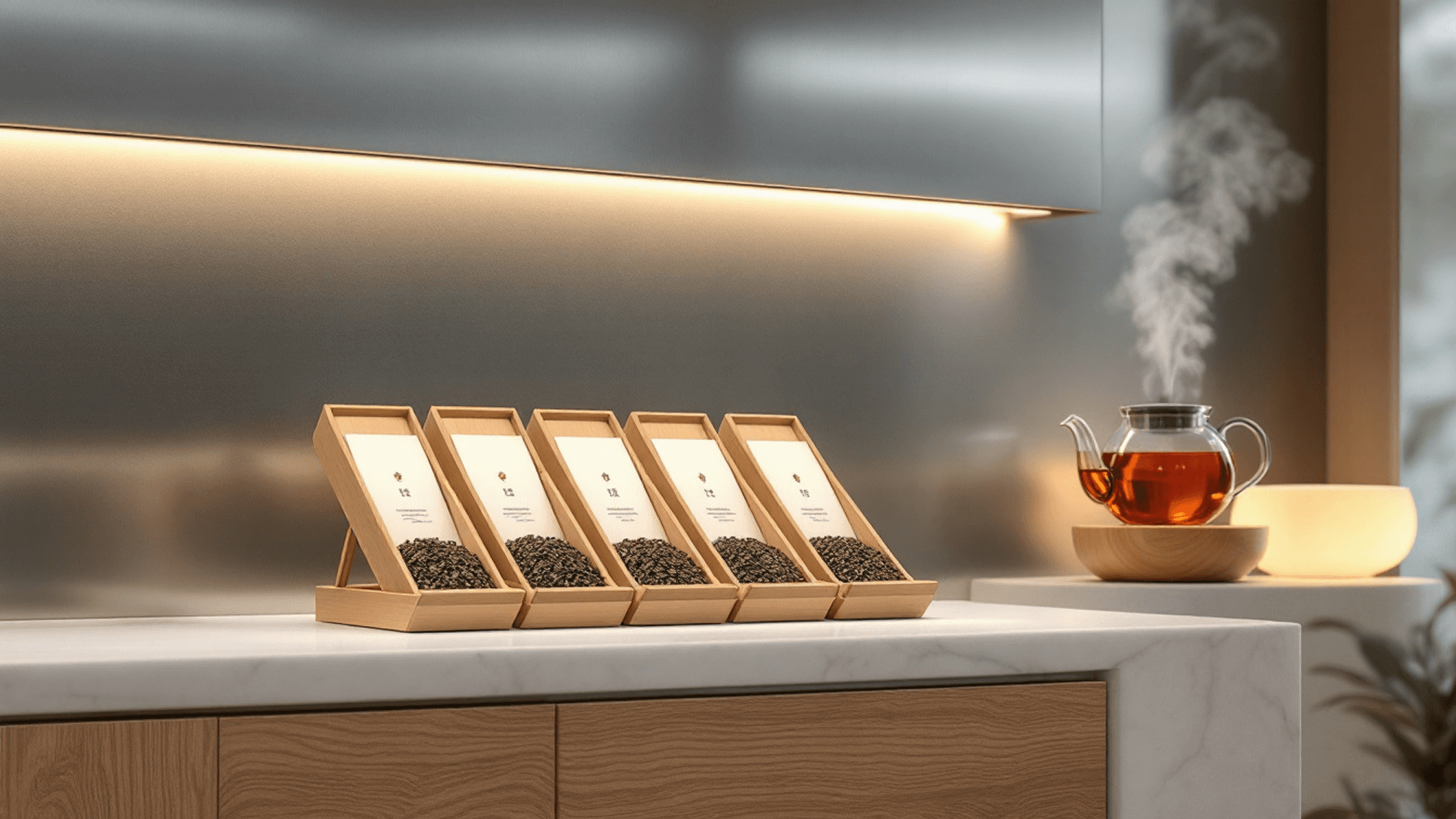
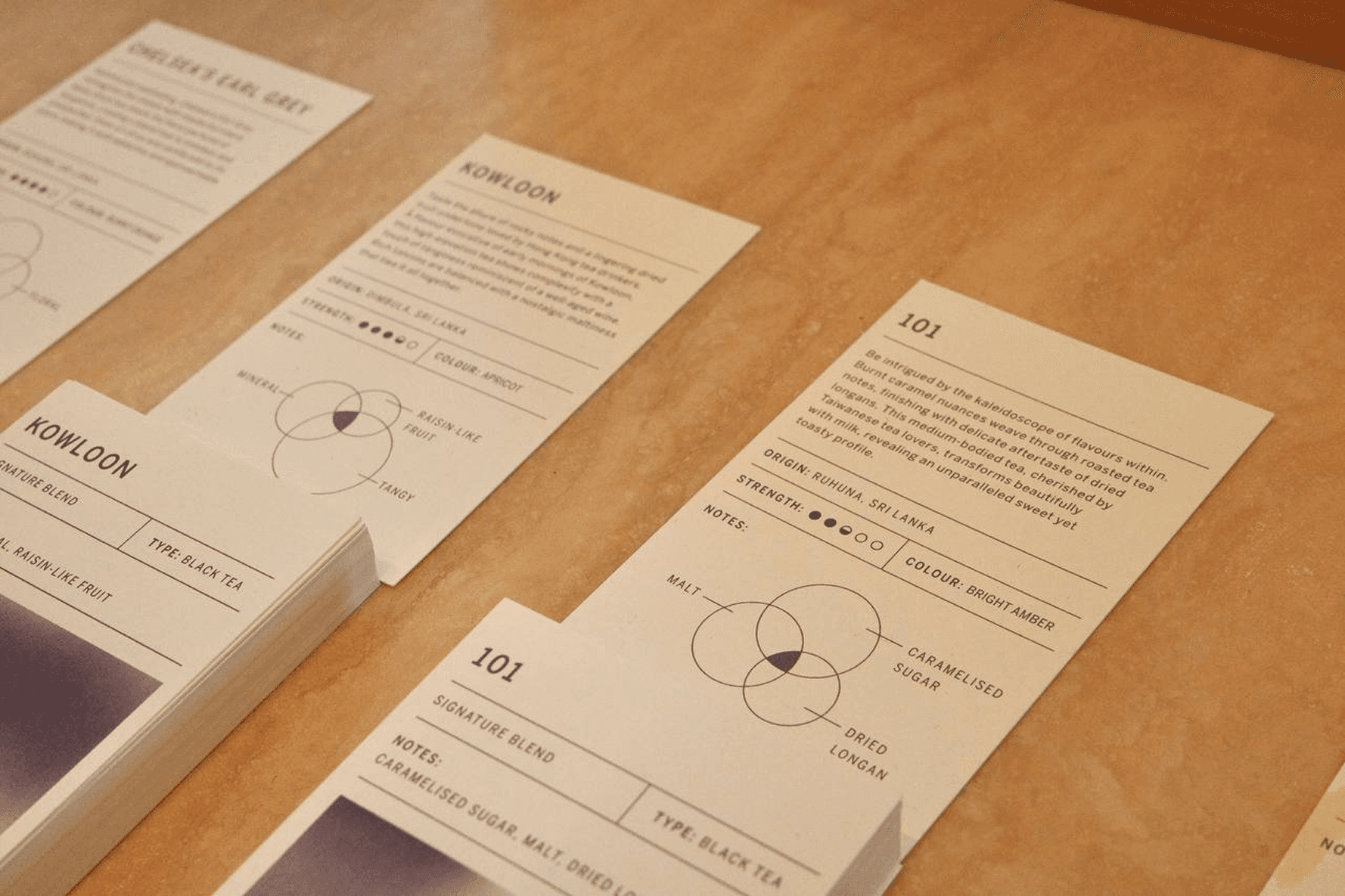
#3 Tea Cards – Minimalist visual merchandising to focus on tea
To spotlight the tea in the retail experience, reduce visual clutter and noise and simplify product selection
Tactile retail experience: Customers interact with the tea and their cards, and can use the card as a gift tag
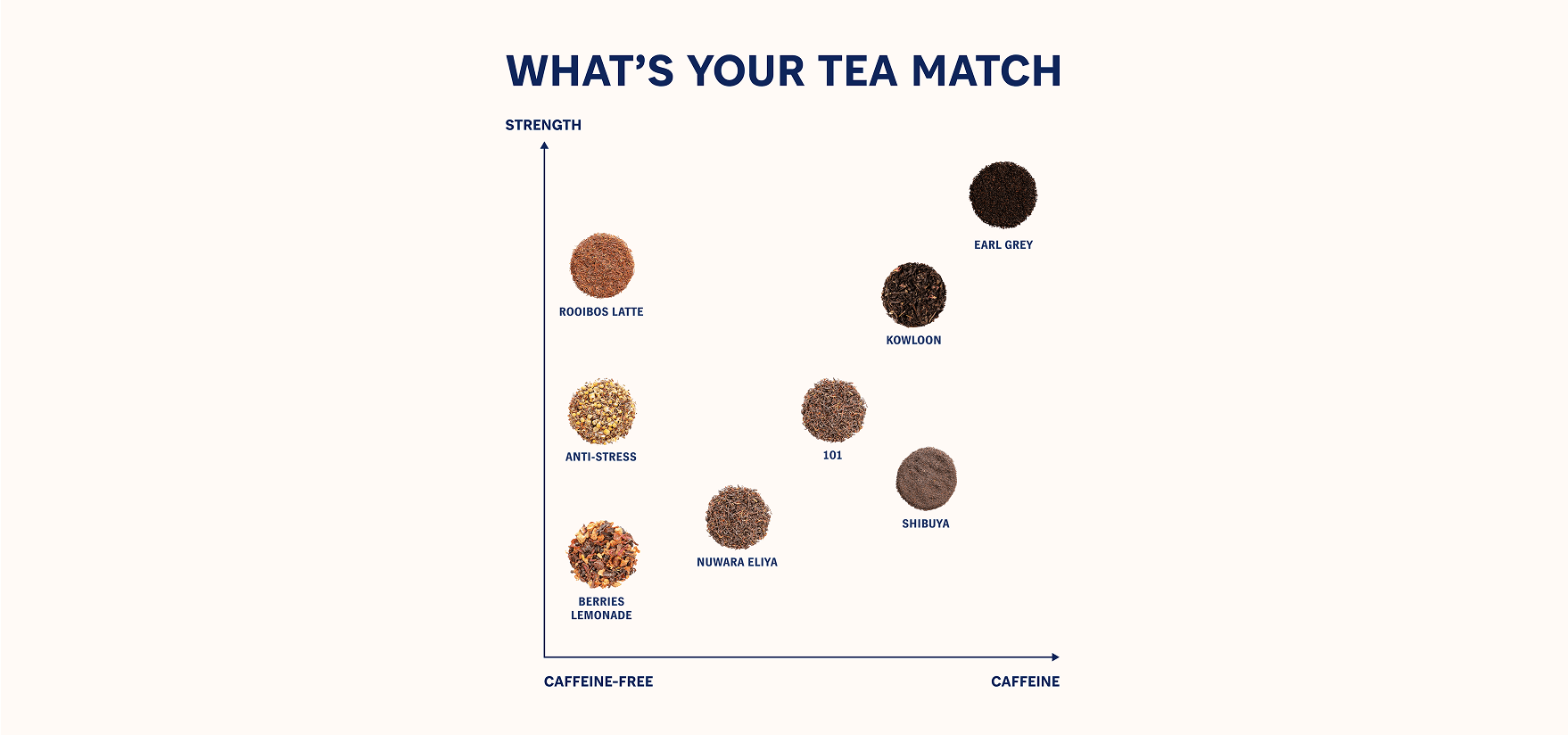
#4 Tea Chart – A display matrix that plots tea blends based on caffeine and strength.
Upon arriving at the store, the installation command attention to aid customers' decision making
What matters: Focus on metrics that directly connect to benefits that customer care about (taste, caffeine)
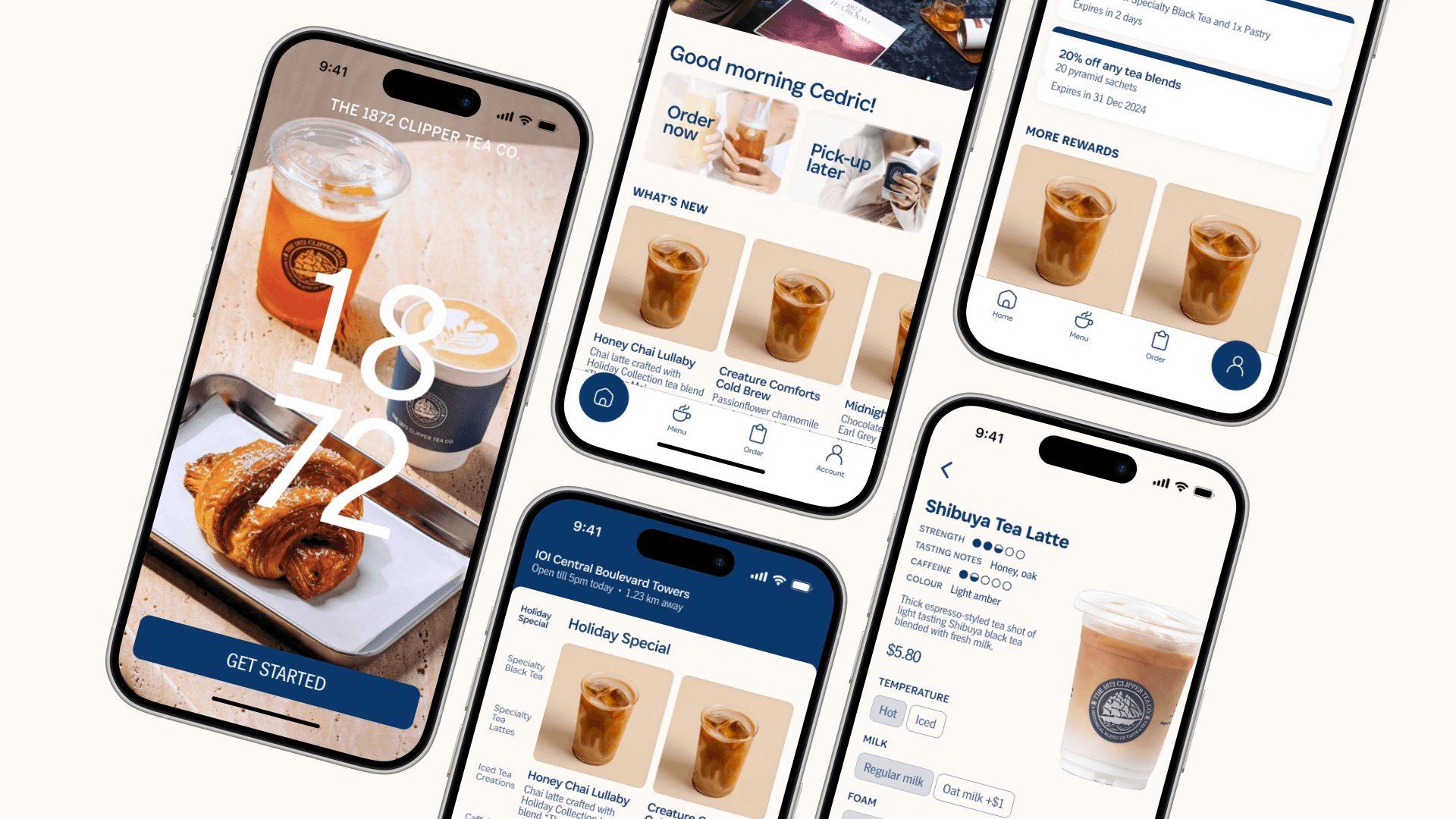
#5 Seamless Online & In-store brand experience
An all encompassing experience: Customers' online journey with personalised tools seamlessly transitions to in-store installations that enhance decision-making and confidence.
Data-driven personalisation: Leverage customer data to offer tailored recommendations, loyalty rewards, and experiences that reflect individual preferences and habits
/results from phase 1
While implementation and formal testing was beyond the scope of this phase, early feedback and client actions following our concept presentation provided encouraging signals of alignment and traction:
Client interest in Insight #3 & Concept #2: We heard from the team during the Concept Presentation that they had actually begun exploring scent marketing options internally shortly after the first co-creation workshop, an indication that the concept resonated with their vision.
Continuation into Phase 2 (Web Revamp): Following the concept presentation, the marketing manager reached out to explore a second-phase collaboration focused on translating the physical experience into a more intuitive and brand-aligned online storefront — effectively extending Concept #5 (Seamless online & in-store brand experience) into a dedicated web design engagement.
“Loved the concepts and especially the app mockup. I think you have a good eye on the brand direction based on what was presented. I'd love to explore refining our website with you.”
- Head of Brand and Marketing, 1872 Clipper Tea Co.
/web design process (phase 2)
To guide the redesign, I began with a quantitative review of existing site performance, supported by basic desk research to benchmark against e-commerce industry averages. Key gaps in the customer journey, including low conversion rates and high cart abandonment, were visualized to identify opportunities for improvement.
I mapped out a typical e-commerce journey drawing from personas from Phase 1 and supplementing with a bit of auto-ethnography (including ordering from the site myself to experience the flow firsthand).
This was followed by a comprehensive UX audit of the live site to identify friction points in navigation, product hierarchy, and storytelling. The findings were synthesized into design opportunities, which I translated into a restructured sitemap and flow aimed at improving clarity, decision-making, and digital storytelling.
/research methods
Low conversion and unclear user intent
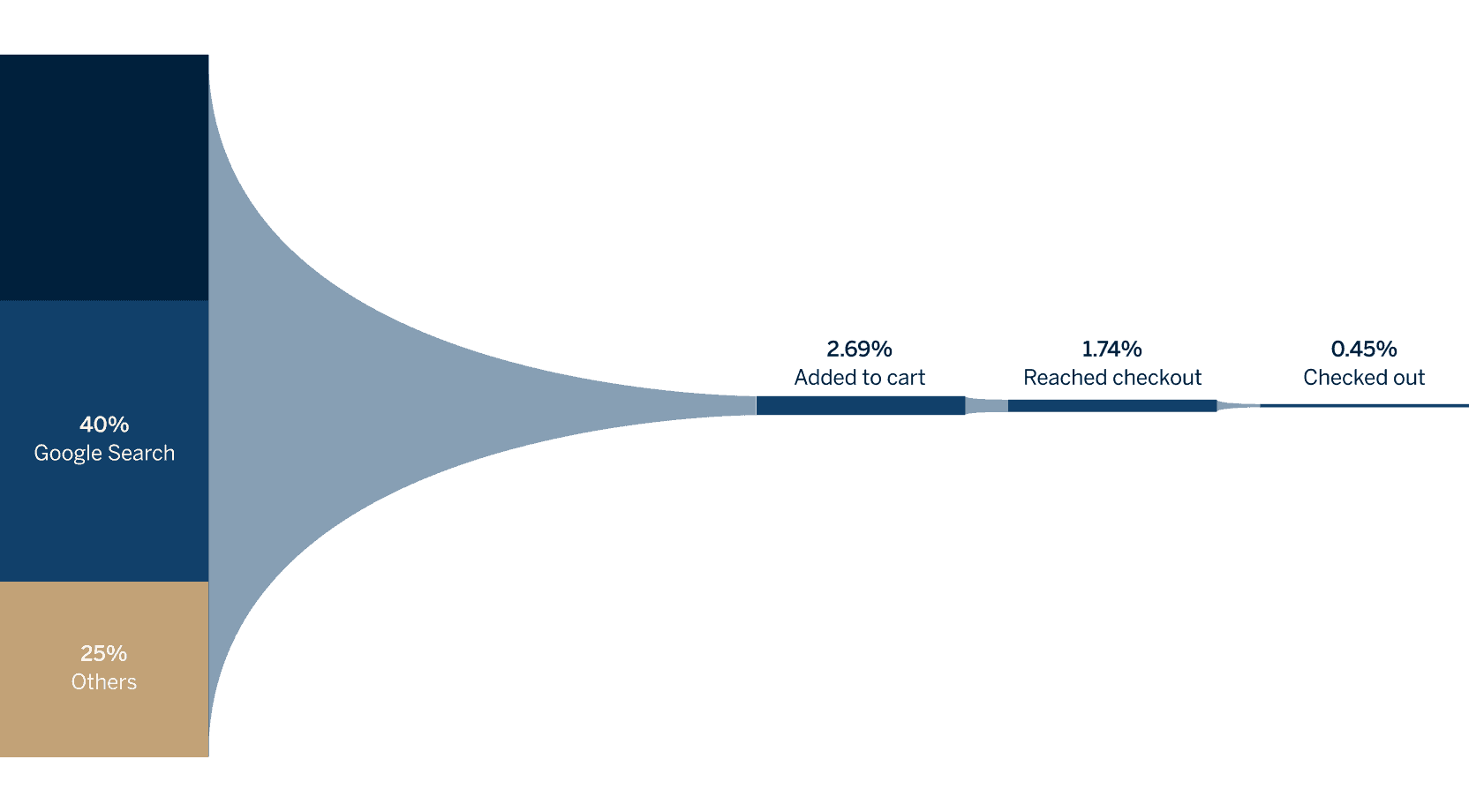
Low conversion rate compared to industry average for e-commerce sites in F&B (6.11%), Consumer goods (3.01%), Luxury & jewelry (1.19%) (Source: Oberlo)
Despite strong branded traffic via Google Search and direct links, the site struggled with low conversion. A significant drop-off was observed between product views and checkout completion, pointing to friction in the discovery and decision-making stages. This highlighted the need to better distinguish e-commerce from informational visitors and clarify pathways to purchase.
High-intent customers blocked at checkout

Overall cart abandonment rate on the higher end of industry average (70.19% - 82%) (Source: Statista)
83% of users who added to cart failed to complete their purchase — a cart abandonment rate exceeding industry norms. The most critical drop-off occurred at the checkout stage, indicating potential usability issues and hesitation. This informed a simplified, trust-building redesign of the checkout flow.
Mapping customer behavior across the digital tea journey
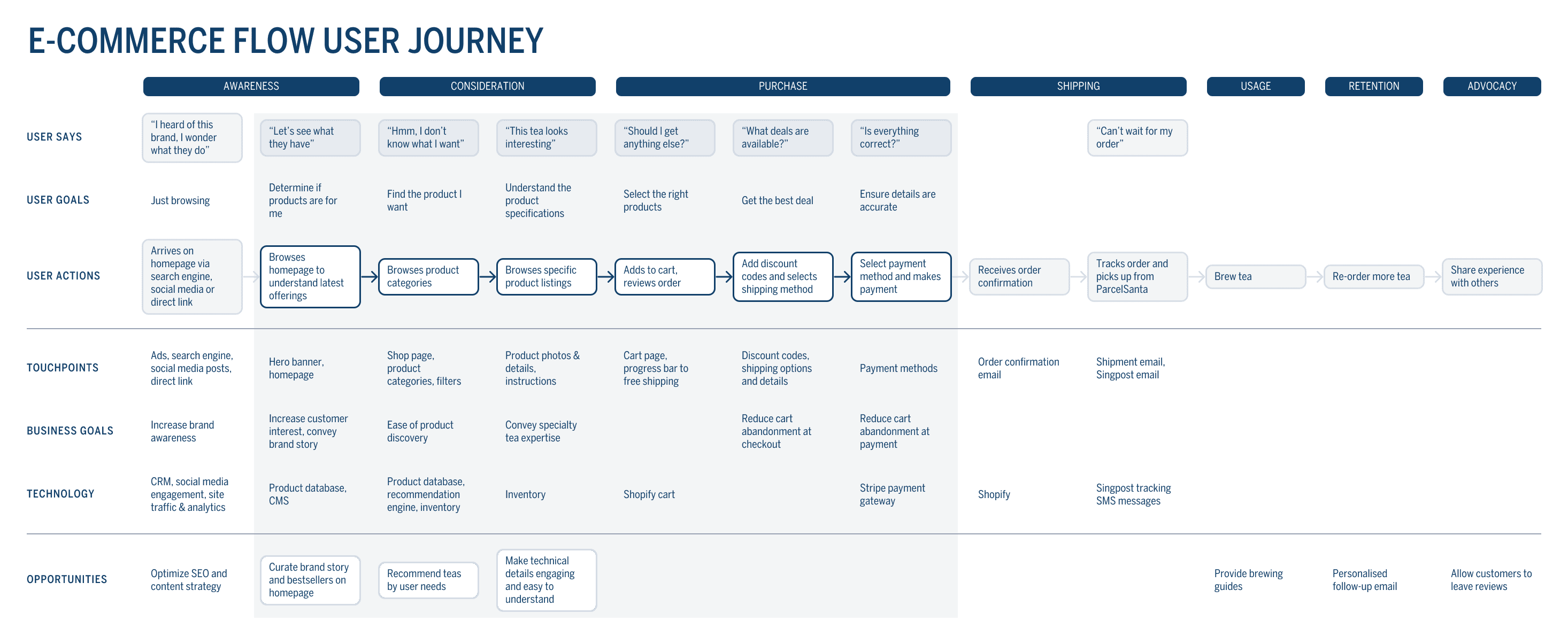
This journey map outlines the typical flow from brand awareness through to post-purchase advocacy, covering both casual browsers and high-intent buyers. Opportunities were identified at key stages — including homepage curation, decision-making support, and post-purchase engagement — to better guide customers and build loyalty.
/insights
This animated UX audit presents key usability issues identified in the original website — from information overload and inconsistent product hierarchy to unclear guidance for new customers. These findings shaped the redesign strategy, particularly in streamlining navigation, enhancing visual clarity, and better supporting different user intents across the tea discovery journey.
/design intervention
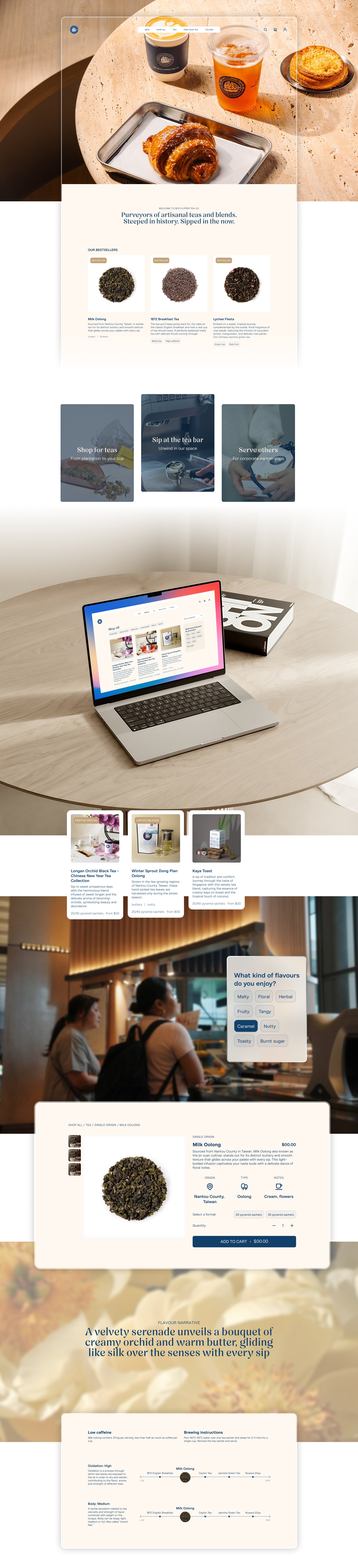
To translate 1872’s sensorial brand story into a seamless online experience, we redesigned the e-commerce site to better support tea discovery, product understanding, and brand trust. The new design introduces six key features that address pain points uncovered in the UX audit and customer journey mapping.
Scrolling homepage
that organically tells the brand story while guiding product exploration
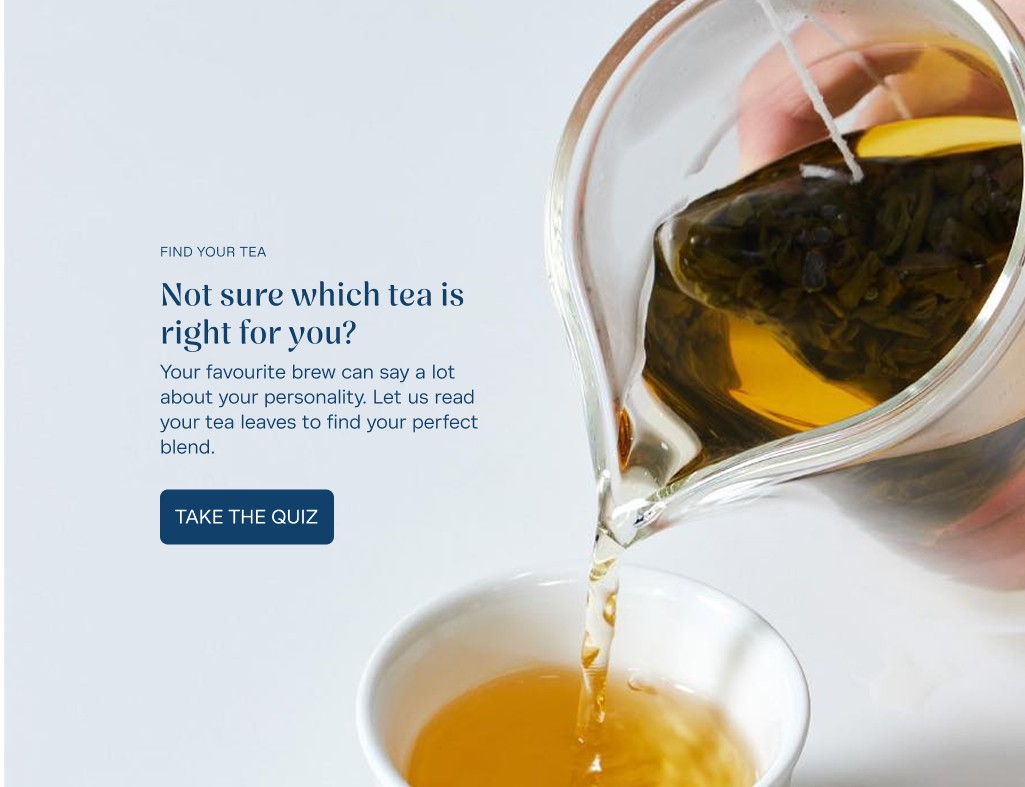
Interactive tea quiz
to recommend blends based on user preferences and moods
Action-based navigation
that directs users by intent, not just product hierarchy
Revamped tea categories
for clearer, more intuitive filtering and discovery
Visualising tea know-how
simplifying complex information into easy-to-understand formats
/conclusion
Across both phases, the project evolved from a brand refresh into a cohesive customer-journey transformation. The service design groundwork ensured that digital design decisions reflected real sensory behaviors, while the new website made the brand’s heritage more accessible to modern audiences. Together, these two phases demonstrate how service design thinking can translate into commercially viable digital experiences, bridging research insight and product execution.
Check out the prototype!